
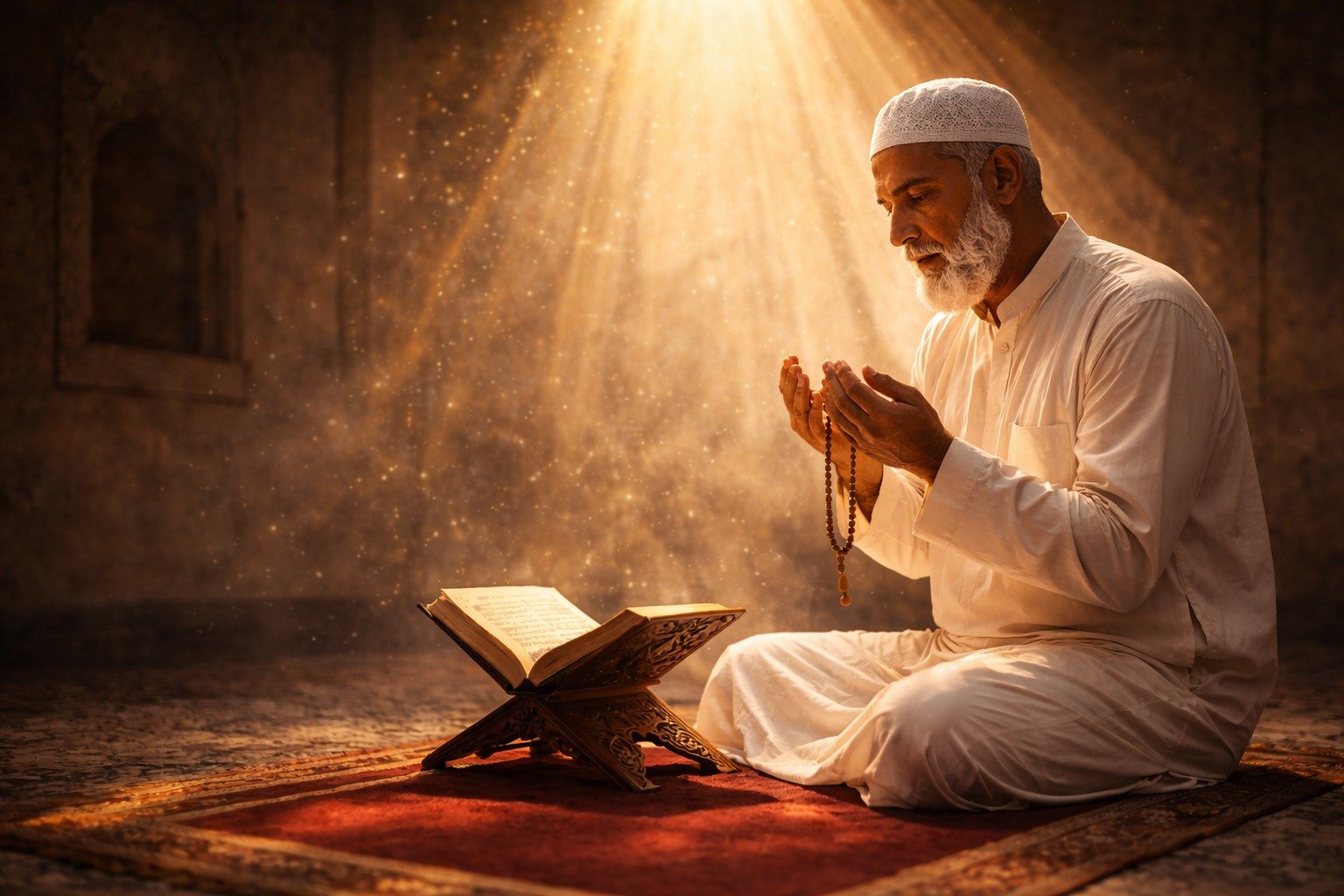
Spiritual Beginnings and Early Experiences
In the previous January issue, this spiritual series was initiated and presented in sequential installments. The series is now being continued from where it was left, providing readers of Tuhfa-e-Ruhaniyat with a brief yet truthful account of significant spiritual experiences and observations that this humble servant has encountered over various phases of life.
From a very young age, the heart turned toward the True Creator. The worldly life began to feel like dust, and concepts of mortality and permanence started to take root in the mind and soul. Perhaps this marked the first true beginning of a life devoted to spiritual pursuits. At that age, there was neither full understanding nor awareness that a divine force had become a constant companion of the soul. It was only known that the heart had chosen its own path, and the soul was being guided elsewhere. This state persisted almost continuously for six years.
During this period, meetings with elders occurred, their love was received, visits were made to the shrines of saints, and the practice of adhkar (remembrances) and spiritual exercises increased. The influence of spiritual elders from the family was especially significant, and perhaps for this reason, the blood carried within it the presence of those beings calling the soul back to its origin, lineage, and center.
Honoring the Spiritual Elder Hazrat Hakim Rasheed Ahmad Saharanpuri
Honoring the Spiritual Elder Hazrat Hakim Rasheed Ahmad Saharanpuri
April 10 marks the anniversary of Hazrat Hakim Rasheed Ahmad Saharanpuri, may Allah have mercy on him. Before proceeding further, readers of Tuhfa-e-Ruhaniyat are requested to pause for a moment and recite Surah Muzammil 5, 12, 14, 21 times along with a Fatiha, praying for the elevation of this spiritual luminary.
Hazrat Saharanpuri completed studies in medicine and religious knowledge in Saharanpur. Raised in a deeply religious household, he maintained focused attention toward spiritual matters. He played a significant role in the Pakistan Movement and became known as Hakim Rasheed Ahmad Saharanpuri. After the Partition, he permanently settled in Pakistan. His father, Hakim Abdul Majid Saharanpuri, brought him to the rural area near Faisalabad to fill a gap where no qualified healer or doctor was available. The family provided not only land but also a home and support. During this time, Hazrat Saharanpuri was pursuing his studies.

Childhood Memories and Spiritual Influence
The majority of childhood and adolescence was spent in the company of this extraordinary spiritual personality. His daily routines of adhkar and spiritual exercises were remarkable. Completing the Quran from Fajr to Isha was customary. After the obligatory prayers, he would recite the last verses of Surah Tauba facing the sky and mark the Kalima on his forehead with saliva, symbolizing light on the Day of Judgment. These verses endowed him with special spiritual influence and divine guidance.
Countless incidents testify to his spiritual prowess. For example, as a child, when requesting pocket money, he would initially respond that the pocket was empty, only to later hand over coins or notes if disappointment was evident. On another occasion, while engrossed in recitation, a wall appeared before him, yet the next moment he was seen beyond it, leaving observers astonished.
Final Years and Spiritual Legacy
In the final years of his life, this humble servant had the honor of serving Hazrat Saharanpuri. During this period, the elder entrusted his full spiritual legacy to Muhammad Ayaz Muzammil Hussain Shah. In 2000, when Hazrat Saharanpuri’s health worsened, his family took him to Karachi for treatment. There, he repeatedly requested Ayaz Muzammil’s presence. Upon arrival, a divine serenity was visible on his face, and for nearly two hours, a spiritual state beyond description prevailed. At the time of his passing, four luminous figures appeared, and his soul departed.
His final resting place is in Karachi, and at the time of burial, extraordinary light was observed emanating from the grave. His grandmother, too, was a spiritually remarkable and pious lady, buried in Faisalabad, who passed away in a state of prayer and forgiveness.
Spiritual Guidance and Teachings
The spiritual guidance received from Hazrat Saharanpuri was not merely formal or ritualistic but a living relationship that oriented the heart, stabilized emotions, and clarified the spiritual path. The first encounter with him brought an immediate sense of calm, trust, and surrender. This bond emphasized that true spirituality arises from sincerity, devotion, and self-discipline rather than claims, miracles, or outward show. Every step in this path required weighing one’s actions, intentions, and thoughts, knowing that missteps were not personal but a breach of trust.
Through this association, it became clear that spiritual blessings are not demanded but received through respect, silence, and perseverance. The ultimate responsibility of these gifts rests on the recipient. Trials, darkness, and fear on the spiritual path revealed the importance of inner resilience and obedience. The essence of this guidance is that true progress comes not from observation alone but from submission, and true greatness lies in humility.
Life Lessons and Continuing Journey
Another notable insight from these spiritual observations is that everything in the inner world unfolds gradually; nothing is suddenly bestowed. Often, a person may feel stationary for years, but in reality, their foundations are being strengthened. Those who persevere, despite appearing stagnant, advance steadily along the path. At such moments, the heart experiences a profound state—sometimes tears come involuntarily, and at other times, it feels as though the soul is presenting itself before an unseen divine tribunal.
Another notable insight from these spiritual observations is that everything in the inner world unfolds gradually; nothing is suddenly bestowed. Often, a person may feel stationary for years, but in reality, their foundations are being strengthened. Those who persevere, despite appearing stagnant, advance steadily along the path. At such moments, the heart experiences a profound state—sometimes tears come involuntarily, and at other times, it feels as though the soul is presenting itself before an unseen divine tribunal.