How Did Magic Begin?
When we turn the pages of human history, one reality becomes clear: mankind has always been in search of the hidden secrets of the universe. The stars in the sky, the concealed forces of the earth, the mysteries of light and darkness, and the secrets of life and death have always captured human attention. This curiosity led humanity toward knowledge—but also toward misguidance.
On one side, the Prophets (peace be upon them) guided humanity through divine revelation, introducing the true reality of existence. On the other side, devils and misguided humans chose the path of magic and sorcery—one that continuously distanced people from Allah. The origin of magic lies in this very rebellion: the desire to break natural laws, gain supernatural power, and dominate others.
Have you ever wondered why humans first learned magic? A single reason did not drive it, but by two powerful forces hidden within human nature: curiosity and the desire for power. Some chose the light of knowledge, while others, intoxicated by power, embraced darkness. This was the moment when magic stopped being a mere “practice” and became a fitnah (trial).

Magic in Ancient Civilizations
Babylon
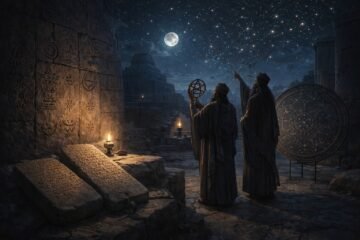
Historically, Babylon is considered the greatest center of magic. The priests and astrologers of Babylon believed planetary movements influenced human life, and they used these beliefs to create talismans and spells. The Quran also mentions Babylon, stating that two angels, Harut and Marut, taught magic as a test for people. Their mission was to examine who would remain steadfast in faith and who would follow the path of sorcery. Here, magic was presented as “knowledge,” while in reality it was a test of belief.
Egypt
In ancient Egypt, magic was deeply connected to religion. Magicians held a high status in the courts of Pharaohs and used illusions to astonish the masses and strengthen political authority through fear. The Quran narrates the famous confrontation between Prophet Musa (Moses) عليه السلام and Pharaoh’s magicians. Their ropes appeared as snakes through magic, but Allah turned Musa’s staff into a true miracle, nullifying their deception. This incident teaches that no matter how powerful magic appears, it collapses before truth.
Greece
In Greece, magic was intertwined with philosophy and mythology. Greek priests and oracles claimed communication with gods and goddesses. Astrology played a major role, as planets were believed to represent divine forces influencing human destiny. By labeling magic as “the power of the stars,” control over people’s minds was established.
India
In India, magic became known as Tantric practices and mantras. Ancient scriptures mention chants believed to possess extraordinary powers. Even today, some religious sects associate magic, rituals, and shrine practices with spiritual sanctity. Here, magic evolved beyond an act—it became a tradition passed down through generations.
China
In China, magic merged with Taoism and the philosophy of Yin and Yang. Magicians attempted to manipulate natural balance to achieve their goals, using talismans, symbols, and charms believed to contain spiritual energy. Although balance was considered the key to power, these practices often led to misguidance.
Europe
During the Middle Ages, magic in Europe was known as witchcraft. Under church authority, women accused of practicing magic were burned alive. Witch trials became infamous, resulting in thousands of executions based on fear, suspicion, and accusation. This era transformed magic into an even more terrifying concept.
Magic in Religious Scriptures
The Quran
The Quran acknowledges the existence of magic but strongly condemns it. A key verse states:
“They followed what the devils recited during the reign of Solomon. Solomon did not disbelieve, but the devils disbelieved, teaching people magic.” (Surah Al-Baqarah 2:102)
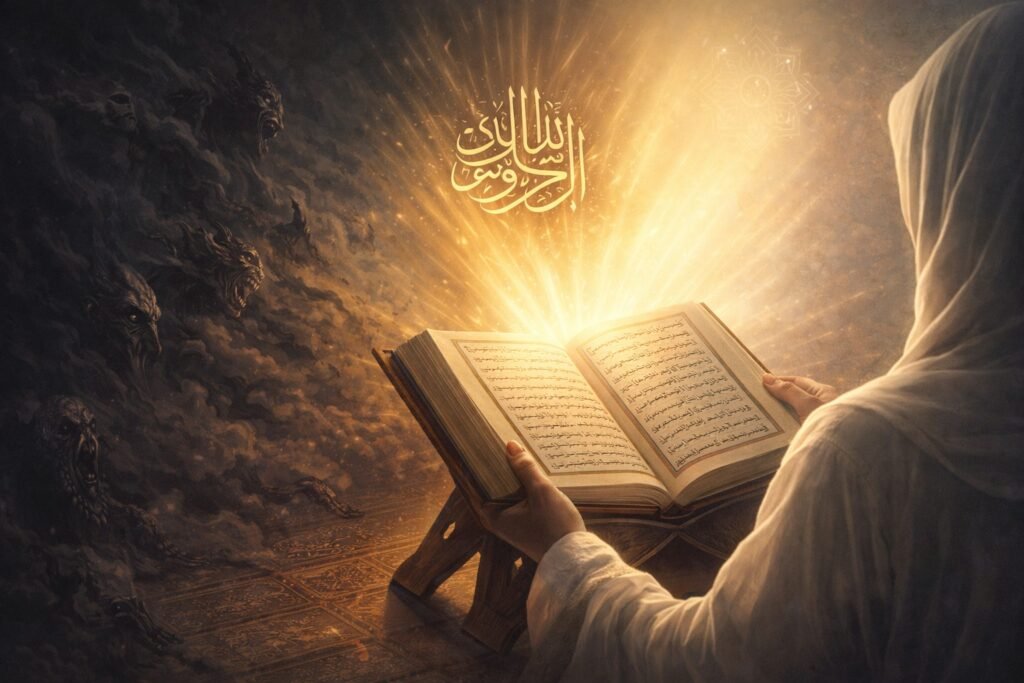
Surah Al-Falaq and Surah An-Naas also teach seeking protection from the evil of magic. This makes it clear that while magic can harm, Allah’s protection is the strongest shield.
The Bible
The Bible also condemns magic. In the Old Testament, magic is described as cursed, emphasizing that sorcery is forbidden in divine law (Deuteronomy 18). This shows that magic has been rejected across heavenly teachings.
Other Religions
Hindu, Buddhist, and Zoroastrian traditions also mention magical forces and protective prayers. While magic existed across civilizations, it was consistently viewed as dangerous and fear-inducing.
The Foundation of Magic: Fear and Greed
Two major human weaknesses became the foundation of magic:
- Fear — of illness, enemies, poverty, or death
- Greed — for wealth, love, control, or power
When humans feel weak, they search for shortcuts. Magic often appears as that shortcut—but it usually leads to destruction.
Magic and Satanic Influence
According to Islamic teachings, magic originates from devils who mislead humans by teaching practices that offer temporary results but ultimately lead to disbelief and ruin. This is why magic is described as satanic knowledge.
Islamic Perspective
Islam categorizes magic as a major sin. The Prophet Muhammad ﷺ said:
“Avoid the seven destructive sins… and among them is magic.” (Bukhari & Muslim)
Islam teaches spiritual protection through Surah Al-Falaq, Surah An-Naas, Ayat-ul-Kursi, and the Mu‘awwidhat, forming a powerful shield for every believer.
Conclusion
The origin of magic lies in humanity’s hidden desire for power and control. From Babylon to Egypt, Greece, India, and Europe, every civilization adopted magic in one form or another. Yet in every era, Allah’s messengers and righteous people conveyed the same truth: real power belongs only to Allah.
Magic may create temporary illusions, but its outcome is misguidance and destruction. If you wish to protect yourself and your home from this evil, turn toward Allah—because faith is the strongest fortress.